
Georgia and Romania share more than a Black Sea coastline and a history of imperial domination. Both nations have spent the past three decades wrestling with the same fundamental question: how to build a stable, prosperous state on the fault line between larger powers. Yet their answers have diverged sharply, and the Georgia vs Romania comparison reveals how geography。institutional choices, and sheer political will can produce very different outcomes.Take the economy. Romania joined the European Union in 2007 and has since attracted billions in foreign direct investment。
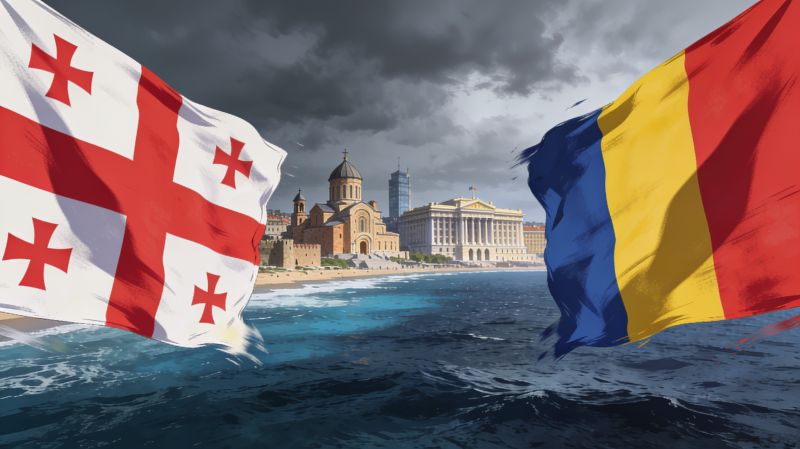
transforming once-dilapidated industrial towns into logistics hubs. Walking through Cluj-Napoca, you see the evidence—glass office buildings housing tech startups alongside restored Habsburg-era facades. Georgia, by contrast, pursued a radical deregulation agenda after the 2003 Rose Revolution. Tbilisi’s streets buzz with small businesses, and the country ranks impressively on ease of doing business. But that model has limits. Georgia’s GDP per capita remains roughly a third of Romania’s. The Georgia vs Romania gap isn’t about effort;it’s about market access. Romania sells freely into the EU single market. Georgia does not.Politics tells an even sharper story. Romania’s trajectory has been messy but directional—toward EU integration, despite periodic backsliding on judicial reform. Georgia’s path is more precarious. The ruling Georgian Dream party has drifted toward illiberal governance, pushing through a controversial “foreign agent” law that sparked mass protests in 2024. I watched footage of young Georgians waving EU flags outside parliament, and it felt painfully familiar—like Romania in the late 1990s。when Bucharest’s own reformers fought similar battles. The difference is that Romania had a clear institutional anchor: NATO membership came in 2004, EU accession three years later. Georgia has neither, and Russia’s 2008 invasion of South Ossetia and Abkhazia remains an open wound.On security, the Georgia vs Romania contrast is starkest. Romania hosts a U.S. missile defense system at Deveselu and contributes troops to NATO missions. Its Black Sea ports are now critical for grain exports amid the war in Ukraine. Georgia, outside NATO。walks a tightrope—seeking Western support while avoiding direct provocation of Moscow. That balancing act has costs. Georgian Dream’s rhetoric often echoes Kremlin talking points, alarming Washington and Brussels. Romanians may grumble about corruption and emigration, but they rarely question their country’s geopolitical direction. Georgians are deeply divided about theirs.What does this mean for the future?
Romania still faces serious problems—a declining population。rural poverty, and a political class that sometimes treats state institutions as personal fiefdoms. Yet its EU and NATO membership provides a floor that Georgia lacks. Georgia’s democratic backsliding could isolate it further, but the country’s vibrant civil society and young, educated workforce offer hope. The Georgia vs Romania comparison isn’t about declaring one superior. It’s about recognizing that external anchors matter enormously—and that without them, even the most determined reformer can find the ground shifting beneath their feet.